Why a squad does more than one sportfluencer
Saturday morning. An athlete posts a photo with a new pair of shoes. Nice photo. A bit of mud on the sole, coffee next to it, a caption about "first kilometres". A few likes from the regulars. A comment from his mum. Maybe someone asking whether they fit well.
And then it's gone.
Not because the post was bad. Not because the athlete has no reach. But because a single post on social media often meets the same fate as a water bottle bouncing off a bike: visible for a second, then under a truck.
Three weeks later something else happens. Over the same weekend, twenty-five runners post the same shoes. Not the exact same photo. Not the same caption. Just: the same product, in the same sporting context, at the same moment.
Suddenly you see those shoes everywhere.
On the trail. In stories. After training. Next to the coffee. With someone you follow. With someone you only know from Strava. With someone from the club. With someone who apparently also did that trail race you're still hesitating about.
Nobody paid for more reach than before. They're still separate posts by real athletes. They just happen to land together now.
And what scrolled past once starts, at twenty-five times, to look suspiciously like something that's happening.
A squad is not a sum of parts
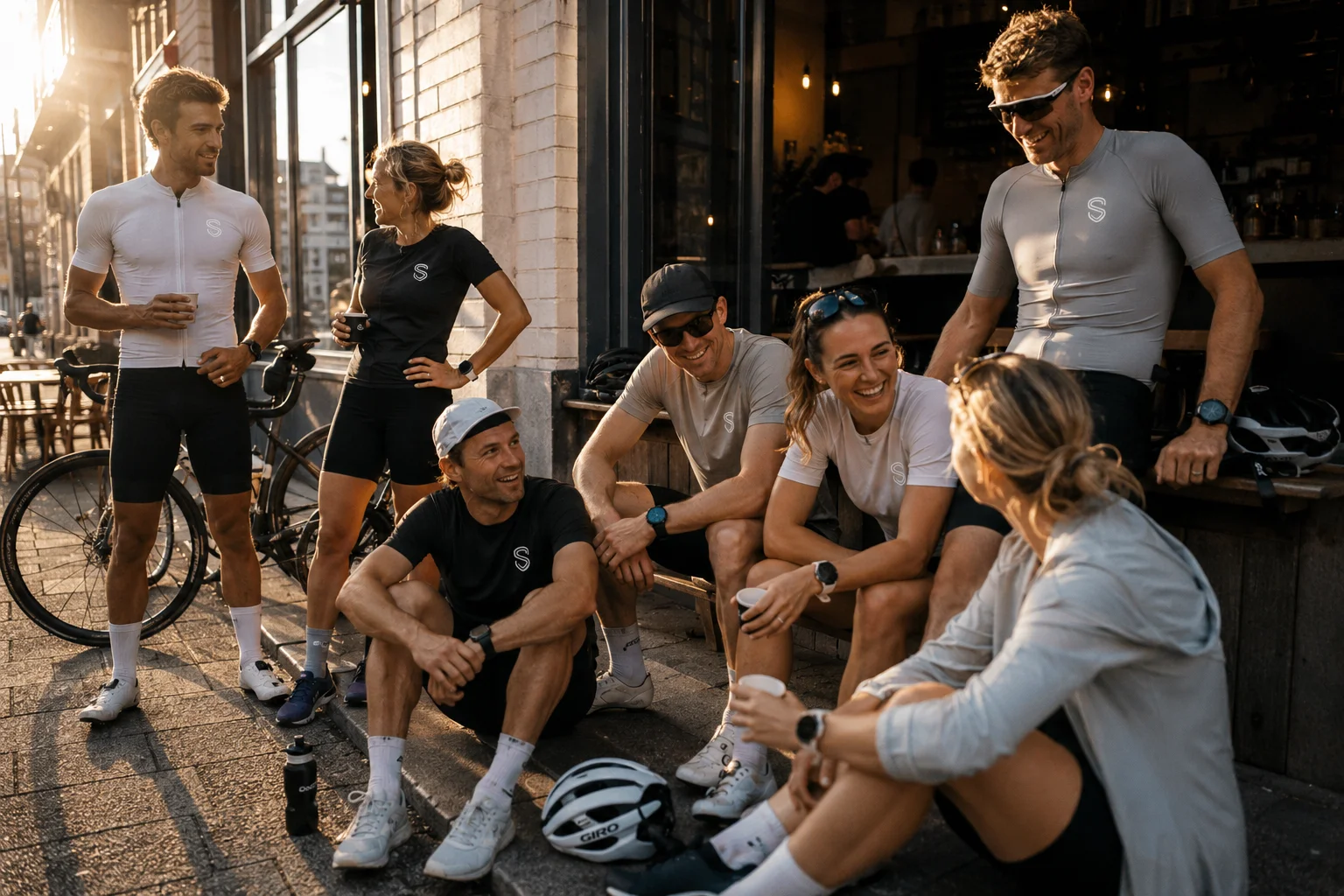
At Sunday Squad we call such a group a squad.
Not: twenty-five separate deals you close one after another.
Not: a spreadsheet with names, follower counts and shipping addresses.
Not: "who fancies posting something in exchange for a parcel?"
Instead: one curated group of athletes making content around the same collab, in the same window.
The brand sets the direction. We find the right athletes. The squad is curated in advance and approved by the brand. Then everyone goes out within the same campaign window.
Important detail: the athletes sign up themselves because they want the product. The drive to be part of it comes first, the selection after.
That looks like a small difference. It isn't.
Because when someone takes part because the product fits their sport, their feed and their community, the content feels different. Less like an assignment. More like joining something they actually want to belong to.
That one principle — together, at once, curated in advance — explains nearly every benefit. For the brand. For the sportfluencer. And above all for the moment that arises between them.
For the brand: from reach to traction
The biggest difference isn't reach. One strong influencer can, on paper, reach a lot of people. Sometimes even more than a whole group of micro-sportfluencers combined.
But reach is not the same as traction.
A single post mostly delivers views. People see something, maybe they like it, and scroll on to a dog, a breakfast, or someone on LinkedIn explaining that failure is actually growth.
A squad does something else.
Because several athletes post at the same time, recognition builds. People don't see the product once, but again. And again. In different feeds, but within the same sporting context. And that changes the question in the follower's head.
No longer: "What is this?"
But: "Why am I seeing this everywhere?"
And then: "Should I know about this too?"
That's where traction begins.
People react. They tag each other. They ask where to buy it. They forward a story. They recognise the product at the next training session. The campaign isn't just watched, it's talked about.
And then there's something brands usually only think about when it's too late: the work.
Because finding, screening, contacting, chasing, briefing and checking twenty-five sportfluencers sounds manageable on paper. In practice it's a small administrative swamp in better shoes.
Who fits the brand?
Who's actually active in their sport?
Who has a credible community?
Who replies on time?
Who understands the brief?
Who actually posts?
Who still needs a reminder?
Who "didn't see the email"?
Those aren't strategic questions anymore. That's just work. A lot of work.
At Sunday Squad we take that part away. The brand gets one curated squad to approve, one point of contact, one agreement and one service fee. No twenty-five separate calendars. No twenty-five email threads. No campaign that slowly turns, internally, into a shared Google Sheet with stress symptoms.
And because the athletes signed up themselves, motivation runs higher. In our first pilot with Wowow the whole squad delivered: 100%. That's not a polished average. That's the floor we want to be able to report.
On top of that, everything lands within one window. No campaign that drips on for months and always feels just too small to notice. Instead a concentrated week in which the brand shows up everywhere at once — around a race, a launch, a season start or a sporting moment.
That's harder to miss. Even for those not in the squad.
For the sportfluencer: not just posting, but taking part
For sportfluencers it works for a different reason, but from the same mechanism.
A paid post on your own quickly feels like a paid post. Even when you genuinely rate the product. You post. You explain. You carry the credibility alone.
A squad changes that dynamic.
You don't post alone. You take part in a shared moment. You see others from your sport doing the same. Some you know. Some you've followed for a while. Some you run into at the start line, at the club, or somewhere halfway through a session where nobody's talking anymore because everyone set off a touch too optimistically.
That makes the collab feel less like an assignment and more like taking part.
That matters. Because sport is rarely purely individual, even when you train alone. You measure yourself against others. You look at what they wear. You see where they run. You notice which gels they use, which sunglasses stay put, which socks apparently do survive the wash.
Athletes influence each other constantly. They just rarely call it influencing. They call it "just asking what you make of it".
Being selected for a curated squad also says something within your community. Not everyone got that parcel. Not everyone was chosen. Not everyone was in that group.
That doesn't need to be played arrogantly. On the contrary. It works precisely because it's subtle. Your followers sense that you belong to something without you having to write: "I'm incredibly honoured to announce…" — a phrase that, incidentally, almost always means a discount code is coming next.
You might think you disappear among twenty-five others. But in practice the opposite often happens. Because the whole squad is visible at the same time, the moment gets more attention. And you're standing right in the middle of it.
Not as a stray advert.
But as part of a group.
And you keep control at the same time. You're not tied to a yearly contract. You don't have to represent a brand that no longer suits you three months later. You take part per collab. If the product fits you, you sign up. If it doesn't, you skip it.
That makes it fairer. For you. For your followers. And, in the end, for the brand too.
The moment belongs to everyone
A single post belongs to one person.
One athlete. One brand. One assignment. One moment in the feed, and then back to the usual parade of training photos, kids, coffees and people going "offline for a bit" at the exact moment they're posting about it.
A squad moment works differently.
It belongs to everyone in it. To the athletes posting at the same time. To the community that keeps seeing it come back. And to the brand that makes it possible without briefing the moment to death.
The reach may, on paper, be the same sum. Twenty-five athletes, so many followers, so many views. But the effect isn't the same.
Because one post asks for attention.
A squad builds recognition.
And recognition is where desire begins.
Back to those shoes.
At the first post you thought: nice pair.
At the third: coincidence.
At the tenth: apparently everyone runs in these.
At the twenty-fifth you wondered why you hadn't tried them on yet.
That's why a squad works.
Not because everyone shouts louder.
But because everyone shows up at the same time.
And suddenly it's no longer a post.
It's a moment.