Dans les coulisses des fitfluenceurs
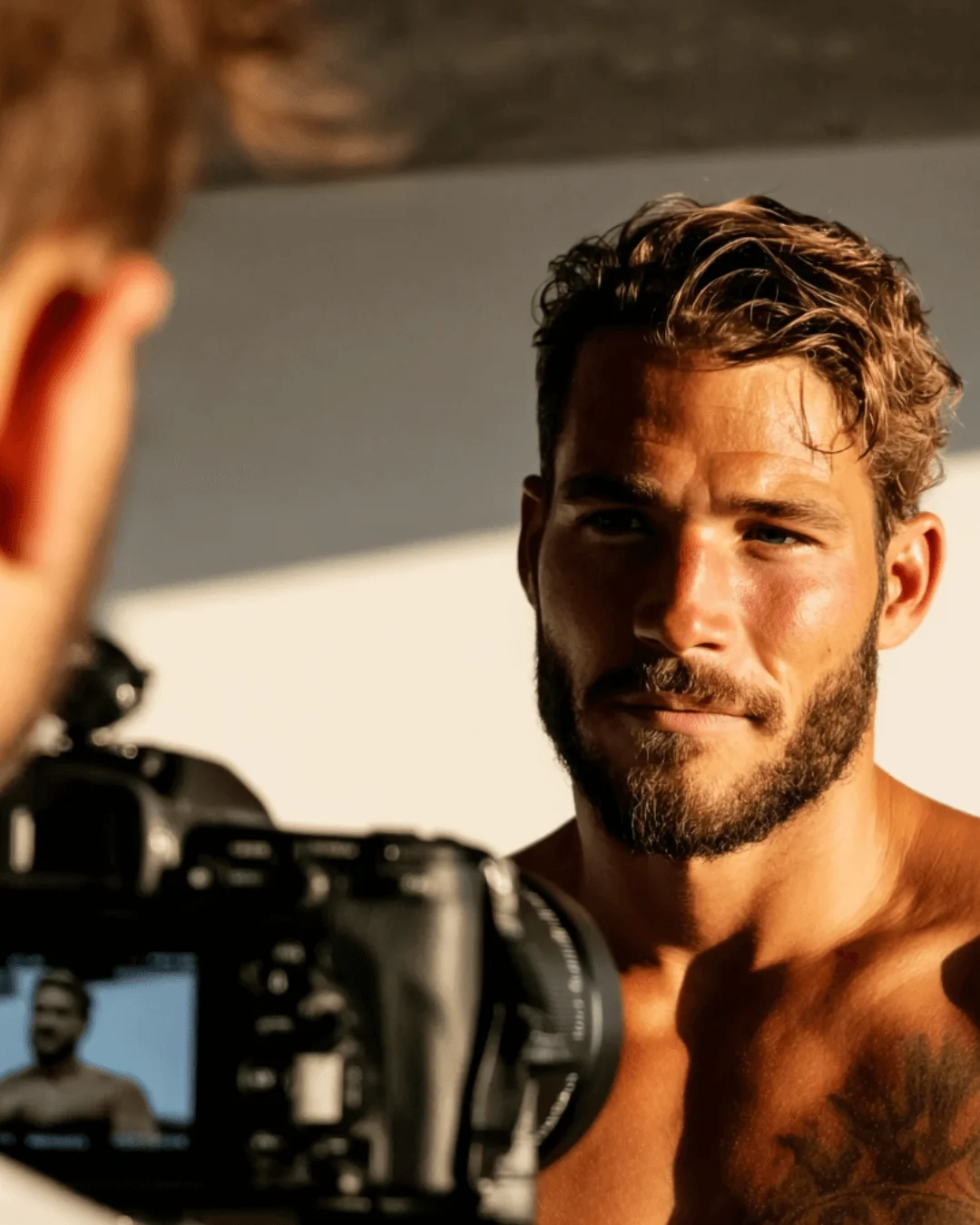
Joe Delaney isn't your average "fitfluencer" — he's actually a wonderfully cynical observer who experiences the fitness industry from the inside and breaks it down for us.
With 800K YouTube followers and 200K+ on Instagram, Joe is himself a mega-influencer. He's British, works in the English-speaking market, and his perspective is therefore: big, stable and with plenty of commercial possibilities. His behind-the-scenes view feels honest — but it's important to keep this in mind: he's mainly speaking from the perspective of someone at his level.
In this blog we do three things:
- Unpack Joe's analysis — what does he say, and where does he admit he doesn't know everything?
- Translate to the Belgian/Dutch reality — what does this look like in our market, with our follower counts and our budgets?
- Editorial fact-check — where can we verify this, and where does Joe gloss over nuance?
Let's take a proper look at his explanation, and then see what it actually means (read our disclaimer at the bottom too!).
You can find the whole thing at https://www.youtube.com/watch?v=A8fuG1AXZhM — The economics of fitness influencing.
Step 1: It starts small. Very small.
What Joe shows: The bottom rungs of the income ladder are affiliate links and YouTube AdSense. Links in your bio that pay a commission (around 10%). YouTube ads where you get a slice of the revenue.
Joe is clear: nobody gets rich from this. But these are "free money" streams. You copy a link, you're done.
In practice (Belgian fitfluencer): A fitfluencer with 10,000 followers on Instagram earns maybe €50–150 per month from affiliate links. From YouTube AdSense with 5,000 subscribers? Probably €20–100.
It doesn't feel like work. But it doesn't feel like income either. Still: for everyone starting out, this is the first money coming in. And psychologically: it feels good to know that your followers actually use what you recommend.
Editorial perspective: This matches what we know about how advertising markets work. YouTube's CPM (cost per mille) for fitness content is indeed lower than for, say, finance content. The numbers Joe mentions are consistent with publicly available information on YouTube payouts. Affiliate commissions of 10% are standard at platforms like Amazon Associates and most supplement retailers.
What this teaches us: This is the fundamental misunderstanding about being an influencer. You think: "Once you're an influencer, the money flows in." Nope. You start with the equivalent of a side hustle.
Step 2: Sponsored content — here it gets interesting
What Joe shows: Once you grow, brands start approaching you. "Yo, want to sell our stuff? We'll pay you."
Sponsored content varies. Joe says he's received anywhere between "a few hundred" and "10,000" per project. In the current climate he says: "£5K is pretty standard" (in GBP, so roughly €5,850).
Joe's strategy? "I just keep asking for more until people say no" — because there's no standard. That's really the only way to set your value.
Joe also admits openly: you say no much more often than yes. Because the products are boring, the compensation doesn't add up, or you don't want to prostitute yourself.
In practice (Belgian fitfluencer): This moment — when brands start reaching out — is more nerve-wracking than it sounds. Suddenly you're being offered money. But at the same time: how do you know you're not going in too cheap?
Joe's "keep asking for more" is good advice, but also scary. You worry you won't get the work if you ask too much.
Realistic numbers for BE/NL:
- Fitfluencer with 15–20K Instagram followers: €300–800 per sponsored post
- Fitfluencer with 40–50K followers: €800–1,500 per post
- Fitfluencer with 100K+ followers: €1,500–3,500 per post
Yes, this is much lower than Joe's "€5,850 standard" — but our market is smaller and less well-funded.
Editorial perspective: This is hard to verify because brands and influencers like to keep these numbers under wraps (non-disclosure agreements). We can only extrapolate from interviews, LinkedIn posts from influencer managers, and industry chatter. The numbers we give here are based on information from agencies operating in this space — not on hard data. So this is our best guess.
What this teaches us: Engagement > followers. But also: it's hard to set fair pricing because there's no transparency. Joe's "keep asking" works for him — but for smaller accounts it can just mean: no deal.
Step 3: Long-term sponsoring — the real bread and butter
What Joe shows: "Let's talk about the bread and butter of fitness influencer income, the long-term sponsorship."
These are contracts with supplement or apparel brands. You get:
- Monthly base fee
- Commission on sales via your code (around 10%)
- Free product
Joe shows his own contracts. He's deliberately vague about exact amounts, but makes it clear that this is much more stable than one-off posts. This is what you can live on. This is where the stability is.
In practice (Belgian fitfluencer): This is the difference between "I'm an influencer" and "I can live off this."
A sponsor deal gives you certainty. Every month you know: this €1,500–2,000 is coming in. That feels good. The commission is a bonus — sometimes €200, sometimes €1,500, depending on how well you can get your followers to use your code.
Realistic numbers:
- Fitfluencer with 20K followers: ~€1,200–1,800/month base + commission
- Fitfluencer with 50K followers: ~€2,000–3,500/month base + commission
- Fitfluencer with 100K+ followers: ~€3,500–6,000/month base + commission
And — this is important — not everyone with 50K followers gets this money. You need engagement. You need a "vibe." Plenty of fitfluencers grow to 100K followers and never get a sponsor deal offered.
Editorial perspective: This more or less matches how agencies operate. Brands work with agencies that assess influencers on engagement rate, audience sentiment, and historical performance. The numbers look plausible — they roughly match what we hear from influencer managers in the Benelux. But this is based on conversations, not public contracts.
What this teaches us: Stability beats volatility. That one €5K post feels big, but that €1,500/month is what pays your mortgage.
Step 4: Selling your own stuff — here it gets interesting
What Joe shows: Eventually fitfluencers start their own businesses. Joe distinguishes three routes:
Route 1: White-label (50/50 split) Someone else makes the product (t-shirt, ebook, app), you sell it. Minimal work, decent margin.
Route 2: Via companies like GenFlow The company builds your business, you focus on what you do well: selling. Joe calls this a "pretty good deal" — you have control, but without the stress.
Route 3: Completely DIY Maximum control, maximum stress, maximum potential. Joe puts it pretty clearly: you can make the most money, but you also do the most work. Most people don't pick this route. Joe himself opts out — not just because it's work, but because he hates corporate jargon.
In practice (Belgian fitfluencer): This moment is where a lot of fitfluencers fail, actually. You have 50K followers and you think: "I'll make a t-shirt and become a millionaire!"
Reality check: you make 20 t-shirts, you sell 7. The margin's okay, but you've put in time too. Was it worth it?
White-label works better because you don't have to think about manufacturing, shipping, customer support. You drop a link and you're done.
Realistic numbers:
- Fitfluencer with 20K followers + white-label merch: €300–800/month
- Fitfluencer with 50K followers: €800–2,500/month (if they market it well)
- Fitfluencer with 100K+ followers: €2,000–5,000/month
Editorial perspective: White-label and GenFlow-like models are indeed growing. The numbers for Benelux are hard to verify — this is mainly based on what seems plausible given market size. We have no hard data on this.
What this teaches us: You don't have to do everything yourself. Sometimes 50% of something is better than 100% of nothing.
Step 5: Coaching — Joe's "nope"
What Joe shows: Coaching is theoretically lucrative. But as you grow, you understand the problem: you'd have to charge someone so much that it's no longer worth it for them. Plus: it's time-consuming.
Joe puts it pretty cynically: "Why spend time coaching people when you could spend it on holiday whilst somebody else runs a business for you?"
In practice (Belgian fitfluencer): This is true, but it's more nuanced. Yes, 1-on-1 coaching becomes inefficient. But online programs, group coaching, and membership models can work.
Most fitfluencers start with coaching (€20–40/hour), but stop once their following grows. It's simply inefficient as a primary income stream.
Only the highly specialised fitfluencers keep going with it — and then at much higher prices (€200–500/month for online coaching programs).
Editorial perspective: Joe honestly admits he isn't well-informed here ("I haven't really mentioned it yet because it's just not something that particularly interests me"). This is a blind spot in his analysis. For many smaller accounts, coaching is still the primary income stream. Joe's experience isn't universal.
What this teaches us: Joe's experience (mega-influencer) isn't universal. For smaller accounts the calculus is different.
Step 6: The examples — what they say vs Benelux reality
Joe gives two hypothetical examples. Let's take a closer look at them.
Example 1: "Mr. Influencer" — Mid-range fitfluencer (Joe's version)
Joe's example:
- 5–10K Instagram likes per post
- 50–75K story views
- 50K YouTube views per week
Joe's income breakdown (in GBP, converted to EUR):
- Sponsor deal (2 brands): £6,000 base + £4,000 commission = €11,700 + €4,680 = €16,380
- 1 sponsored YouTube video/month: £2,000 = €2,340
- 1 sponsored Instagram post/month: £1,500 = €1,755
- White-label products: £2,000 = €2,340
- YouTube AdSense: £1,000 = €1,170
- Affiliate: £500 = €585
Total: roughly €26,170/month
(Joe himself says "This is GBP, by the way" — important detail!)
Benelux extrapolation:
A fitfluencer with comparable engagement in Dutch/Belgian reach:
- 8–12K Instagram likes per post (much smaller absolute numbers, but similar % engagement)
- 25–40K story views
- 25–30K YouTube views per week
Realistic income breakdown:
- Sponsor deal (1–2 brands): €2,000 base + €600–800 commission = €2,600–2,800
- 0.5 sponsored YouTube videos/month on average: €600
- 0.5 sponsored Instagram posts/month on average: €500
- White-label/own products: €600
- YouTube AdSense: €200
- Affiliate: €100
Total: ~€4,800/month
That's about 18% of Joe's figure (once we correctly convert his GBP to EUR).
Important: this isn't because Benelux fitfluencers are less good. It's because:
- The market is smaller (17 million Dutch, 11 million Belgians vs 67 million British vs 330 million Americans)
- Brands have much less budget for influencer marketing in our region
- The CPMs are lower
- Brands are less inclined to put down large sums for local influencers
In practice (Belgian fitfluencer): This number — €4,800/month — is where many fitfluencers in BE/NL sit once they've "made it." It feels good, but it doesn't feel like "Joe Delaney rich."
Editorial perspective: This is pure extrapolation. We can't hard-verify it without also interviewing Benelux influencers. This is our best guess, but it is a guess. That's exactly why we're asking for input at the end.
Example 2: The big league (Joe's version)
Joe says: "Somebody with these numbers could quite easily be hitting 100,000 plus some months."
These are accounts with 200K+ YouTube views and 20K+ Instagram likes per post. Joe himself is in this category.
Joe's income breakdown (estimated, in GBP/EUR):
- Multiple sponsor deals: £8,000–12,000 = €9,360–14,040
- High-ticket sponsored content: £1,500–3,000 per post = €1,755–3,510
- White-label/own business: £5,000–8,000 = €5,850–9,360
- YouTube AdSense + affiliate: £1,000–2,000 = €1,170–2,340
Total: ~£15,500–25,000 = €18,135–€29,250/month
Joe says this can "easily" reach €100K+ — but that's probably in strong months, or if you have multiple projects running in parallel.
Benelux extrapolation:
Someone like Joe, but in Dutch/Belgian reach:
- Multiple sponsor deals: €6,000–10,000
- High-ticket sponsored content: €1,500–3,000 per post
- Own business/products: €4,000–8,000
- YouTube AdSense + affiliate: €800–1,500
Total: ~€12,300–22,500/month
That's about 42–77% of Joe's figure (depending on strong vs weak months).
In practice (Belgian fitfluencer): At this level there aren't many accounts in BE/NL. Maybe 10–20 fitfluencers/runfluencers/sportfluencers who really sit here. They're the eco-type — they're recognised a lot, they get stopped on the street, they have real influence.
Editorial perspective: Same here: pure extrapolation. We'd love to verify this with actual interviews.
What we learn from all this — the big takeaways
1. Joe is mega, and that matters
Joe has 800K YouTube followers. That's the top 1% of content creators. His analysis is honest, but it's from above. A lot of his "this is how it works" is specific to his level.
Also: Joe operates in the British/English-speaking market. There's more money there than in Benelux.
2. It goes up gradually, not exponentially
There's no magic threshold where money suddenly flows. You go from €200 to €500 to €2,000 to €5,000/month. Each step costs time. A lot of time.
3. Stability > spikes
That one €5K post feels big. But that €1,500/month sponsor deal is what you live on. And what lets you take your next step.
4. Engagement > followers
Joe doesn't explicitly raise this, but it's everywhere in his analysis. 10K engaged followers are more valuable than 50K passive followers. This is what agencies look at when evaluating influencers.
5. Benelux is smaller, but not broken
Yes, you earn less than an American or British equivalent. But €5,000–8,000/month for doing something you enjoy? That's pretty okay. Not everyone has to make Joe money.
6. Honesty over bullshit
Joe says himself where he isn't sure. That makes him credible. "I don't know much about it" beats fake guru vibes.
The realistic picture for BE/NL
If you have 15–20K followers and decent engagement:
- Monthly: €2,500–3,500 (realistic net)
- It feels "good," but you can't yet live on it without other income streams
- You still have another job, or you combine this with coaching/consulting
If you have 50K+ followers and genuinely strong engagement:
- Monthly: €5,000–8,000 (realistic net)
- Now you can live off it
- This is full-time work without a "regular job"
- Still not luxury level, but it's stable
If you have 100K+ followers and you've built your own ecosystem:
- Monthly: €12,000–22,000 (realistic net)
- Now you're really "full-time"
- You're a business, not an influencer
- This is rare in BE/NL
The big disclaimer
All of this is extrapolation. We have Joe's numbers (UK, mega-account), and we've redirected them to Benelux. This isn't fact — it's guesswork based on logic and what we know about markets.
The reality is:
- Every fitfluencer, runfluencer, sportfluencer has a different mix
- Seasonality plays a role (summer vs winter, New Year's resolutions)
- Some brands pay much better than others
- Two accounts with the same followers can differ 10x in earnings
- Niche matters (cycling brands have a different budget than shapewear)
- Engagement is harder to measure than followers, but much more important
- GBP vs EUR conversion plays a role in international work
That's why we'd love to TALK with you.
Are you a fitfluencer, runfluencer, or sportfluencer in the Netherlands or Belgium? Or do you know one? We'd like to know:
- What does your income mix look like?
- Where do you earn the most?
- What does Joe get right, what doesn't he?
- What are the biggest challenges nobody talks about?
- What does it look like in your niche (cycling, running, CrossFit, etc.)?
- At what follower count did sponsorship really become interesting for you?
- Which income stream is most overrated?
- What would you like to know about how others earn?
Send us a DM, mail, or drop a comment. Anonymity guaranteed, obviously! We'd love to hear first-hand what it actually looks like, not via filters or non-disclosure agreements.
We'd love to flesh this out with real Benelux data.
À lire aussi
Nouveau sur Sunday Squad : ignorer une collab, avec une raison
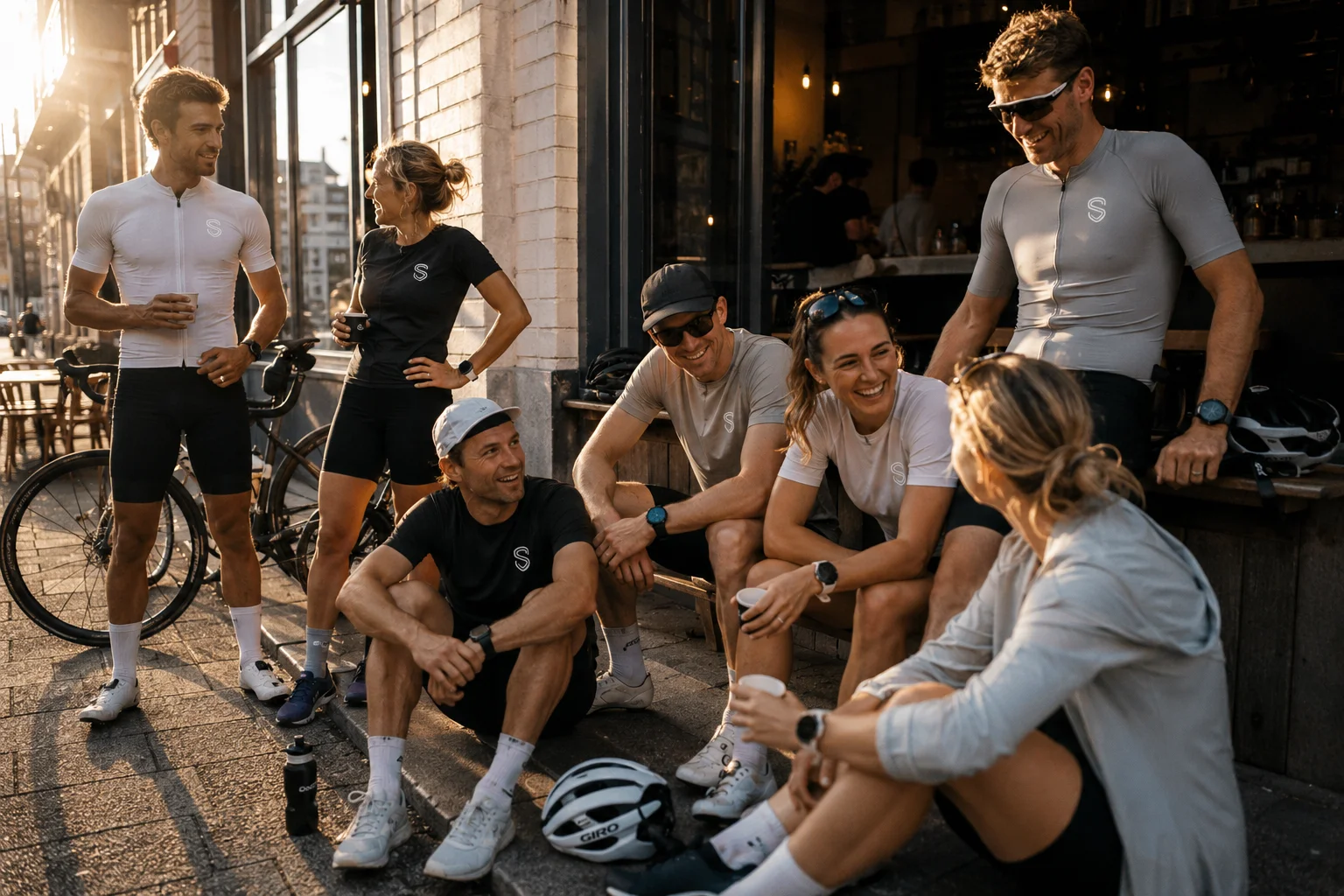
Pourquoi un squad fait plus qu'un seul sportfluenceur